terça-feira, 9 de abril de 2019

From The Soundboard: AI is on the rise to curate the soundtracks to our lives

For many people, the first step to exercise is finding a good playlist. Exercisers turn to Spotify in search of high-adrenaline tracks to help on them on the treadmill or at the barbells. Or, on date night, the host sets the mood by searching for "romance" playlists to play in the background while they prepare dinner. Sleep enthusiasts rave about the benefits of soundscape apps that play back terrestrial noises to lull users to sleep.

Mood and environment-based playlisting is gaining ubiquity. Listening to music is arguably becoming more of a background activity than one that is given unadulterated attention (such as film or video games), and people want sounds that supplement their daily lives. Instead of trying to find specific albums that conjure a particular ambiance, people spend time looking for playlists that align with the environment they are in or the activity they are engaging in.

Why do we need highly curated playlists, though? What if there was an entire platform that did this in real time, without the need for human interaction? Adaptive music — music that "adapts" to a person's setting — is on the horizon for the music industry and will have monumental implications for the way music is created and consumed. The premise of adaptive music is fairly simple: An user indicates to the software in some way (or the AI would be smart enough to recognize) that they are engaged in some activity or have transitioned from one activity to another, and music is created in real time to fit whatever they are doing.

For example, suppose someone is taking a quick jog around their block for 30 minutes and they enter a "workout" application on their smartwatch or smartphone. AI would use this information to immediately craft a soundscape that complements the energy of their run. After the workout, the music would change instantaneously to help the runner relax. Or, from greetings and cheese board appetizers to red wine and goodbyes, the music would adapt to a party host's needs without the host having to ever interact with the software.

Interestingly, the technology for something like that already exists and is already in use. Warner Music Group, one of today's three major record labels, just signed a deal with AI start-up Endel, an algorithm creates albums based on mood and environment and suggests those to users based on what they are doing. Similarly, start-up Weav Music takes existing songs and alters their BPMs based on the activity the user is engaged in.

This has pretty far-reaching ramifications for the music and tech industries. Since major labels are beginning to sign contracts with adaptive music platforms, it is conceivable that they may own copyrights for AI neural nets in the future instead of albums and singles created by humans. That would revitalize the recorded music business and keep labels from going under and would open up myriad job opportunities for musicians. The software would definitely need human input in the early stages for things like basic music theory and mood detection; the neural net would need to understand chord progressions, cadence, melody and atmosphere. This provides ample opportunity for practicing musicians, music professors, musicologists and music engineers.

For tech giants like Apple, Google and Amazon, this frontier presents major means for innovation. All three companies have their own music streaming services, as well as their own home speakers. Take Apple, for instance. The company's music streaming service Apple Music is fully integrated with its home speaker, the HomePod. Imagine someone walking into their living room with their iPad, lying down on their couch, opening the Apple Books app and then saying, "Hey, Siri, play my Music IQ radio station." The AI, in turn, would recognize that the user is in their living room, lying down on their couch with a book and create music accordingly.

AI is scary to many people, but it has a plethora of applications that can augment our everyday lives. Think about how common it is to sometimes endlessly search for music to fit particular activities or moods. Why not use an AI that creates the exact sounds you are looking for, and does it all instantly? Adaptive music is already here, and it is only a matter of time before we are all engrossed in it.

Willard Givens is a sophomore writing about the music industry. His column, "From The Soundboard," runs every other Monday.

segunda-feira, 8 de abril de 2019

Child forced to sleep on garage floor because of dad's music

A 12-YEAR-OLD child was forced to sleep on the floor of a garage as their father refused to turn down loud music for three hours.

The 41-year-old father was sentenced in Rockhampton Magistrates Court yesterday after pleading guilty to contravening a domestic violence order.

Police prosecutor Julie Marsden said police found the 12-year-old sleeping on a mattress on the floor in the garage and the defendant yelling at the child's mother "I want you out of this house tomorrow" when they arrived at the Rockhampton residence for a domestic violence breach.

She said the children had asked their father multiple times over three hours to turn the music down so they could sleep, but he did not comply.

Ms Marsden said the defendant claimed he didn't think he was doing anything wrong, he "just wanted the aggrieved and the kids to leave the house".

Magistrate Jeff Clarke said the defendant had a history of abusing alcohol and breaching domestic violence orders and had been subjected to three probation orders in the past.

He ordered the defendant to pay a $750 fine and a conviction was recorded.

Family stays at IKEA after catalogue puts them to sleep

[unable to retrieve full-text content]They were asked to stay overnight to test-run a new app, designed by IKEA to put people to sleep. Instead of upbeat music, the 22-minute IKEA Sleep podcast is designed to lull listeners into slumber ...

sábado, 6 de abril de 2019

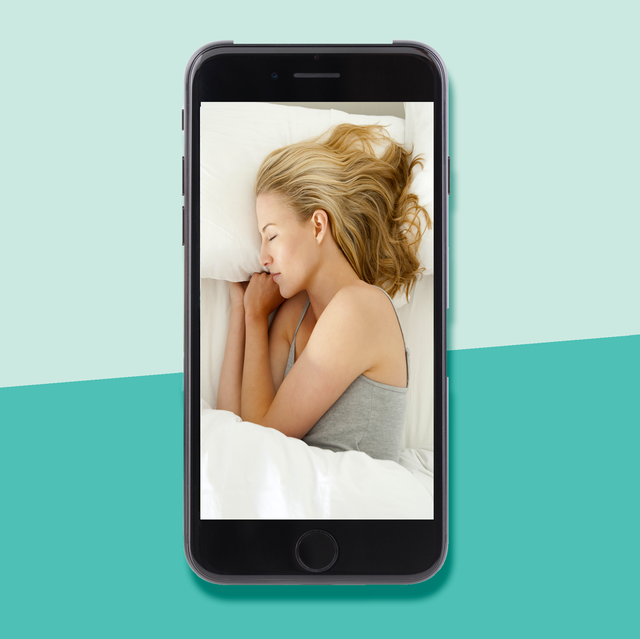
7 Best Sleep Apps to Download in 2019, According to Experts

image

Getty

Struggling to catch enough zzz's? There's an app for that (no surprise there!). In fact, there are so many sleep apps that promise to help you fall (and stay) asleep that it can be hard to figure out which ones are worth a try. That's where the experts at the Good Housekeeping Institute come in. We got feedback from real consumers to determine the best sleep apps out there. Whether you want to drift off to a meditation or a bedtime story, download one of these apps today to get the sleep you (so desperately) need. Sweet dreams!

Advertisement - Continue Reading Below

1 Headspace

Headspace has made a name for itself as a meditation app, but it's also great for sleep. The free version has "sleepcasts," which are 45-55 minute-long audio experiences (kind of like adult bedtime stories) that help you visualize calming experiences, like a slow moving train or a walk through a garden. There are new stories every night, so you you'll never get bored. If you upgrade to the paid version, you'll get access to more than 40 themed meditation courses (like for sleep and stress), plus many more sleepcast and music options to help you wind down.

Cost: free for select content; $95/year for full access

Get it for iOS or Android.

2 Noisli

This super simple app lets you choose from a bunch of different sounds (like thunder, wind, white noise, and even the buzz of a coffee shop) to create your ideal sleep soundtrack. You can create a combo of sounds you love that you can save in the app for future use. Pro tip: If you're using it overnight, keep your phone plugged in—otherwise, you may wake up to a dead battery.

Cost: $2, website is free

Get it for iOS or Android.

3 Pzizz

With Pzizz, you can set a timer for the length of sleep session so it plays a soothing dreamscape (read: combo of music, voiceovers, and sound effects) while you snooze; then, you can wake up to the built-in alarm. You'll need to upgrade for more advanced features, like the ability to choose different sounds, but the app offers a seven-day free trial.

Cost: free for select features; $60/year for full access

Get it for iOS or Android.

4 Slumber

Slumber offers a combination of experiences to help you fall asleep, whether it's meditation focused, a six-part bedtime story series, or the sound of a warm jacuzzi. You can also choose a background noise (like rain or the ocean) to play for up to 10 hours after the main track ends. New sleep-inducing stories and meditations are added each week, and you can listen to them all if you upgrade to the premium version (otherwise, you can get many episodes for free).

Cost: free for 10+ episodes; $40/year for full access

Get it for iOS.

5 Calm

Calm's app is super easy to use, and the Sleep Stories section has bedtime stories (for kids and adults!) read aloud by people with soothing voices, including celebrities like Matthew McConaughey. Only a few stories are included for free, but getting a subscription unlocks a huge library of meditations made specifically for sleep — plus categories like stress and ASMR!

Cost: free for some features; $70/year for full access (includes a seven-day free trial)

Get it for iOS or Android.

6 Sleep Cycle

If you want to learn how you slept, the Sleep Cycle app is for you. It tracks your sleep patterns and provides tips to optimize your snooze time. Plus, it has a an alarm clock that gently wakes you up when you're in your lightest sleep phase so you'll wake up feeling refreshed. Just keep in mind that no sleep tracker is 100 percent accurate so if you're really struggling with your sleep, you may need to see a dedicated sleep specialist.

Cost: free

Get it for iOS or Android.

7 10% Happier: Meditation

If you still haven't found a sleep app that works for you, 10% Happier is worth a shot. It offers a wide range of meditations — including ones for sleep — that range from three minutes to 45 minutes to help you relax and fall asleep. There are also meditation courses spanning a variety of genres and the option to message a coach for extra support.

Cost: free for one session; $15/month or $100/year for a subscription

Get it for iOS or Android.

Selina Tedesco, Good Housekeeping Institute Product Testing Analyst, Media & Tech Lab Selina Tedesco is a product testing analyst in the Media & Tech Lab at the Good Housekeeping Institute, where she evaluates consumer goods like electronics, smart devices, toys, cars and home improvement merchandise. Amina Lake Abdelrahman, Good Housekeeping Institute Editorial Assistant Amina is an editorial assistant at the Good Housekeeping Institute, where she works with lab experts (who test all the latest products) and writes original content based on their recommendations.

Advertisement - Continue Reading Below

sexta-feira, 5 de abril de 2019

Missouri Dad Nestles Newborn Daughter on Top of Guitar to Lull Her to Sleep: 'It Works Every Time!'

Missouri Dad Nestles Baby on Top of Guitar to Lull Her to Sleep | PEOPLE.com Top Navigation Close View image

Missouri Dad Nestles Newborn Daughter on Top of Guitar to Lull Her to Sleep: 'It Works Every Time!'

this link is to an external site that may or may not meet accessibility guidelines.

quinta-feira, 4 de abril de 2019

The Dreampad Smart Pillow Put Me to Sleep in Minutes After the Most Stressful Day

I've always been the person who, no matter how tired I am at 9 p.m., will be awake until midnight trying to slow my thoughts and calm my mind. One thing that can help me rest assured once I do finally fall asleep, though? Knowing that I'm not alone. In fact, according to Dreampad Sleep, 27 percent of the population has trouble falling asleep and 68 percent struggle with difficulties sleeping at least once a week. Oof...

Memory Support

dreampadsleep.com

$159.00

For this reason, when I learned about The Dreampad—a smart pillow designed to help people sleep deeply, thanks to an embedded white noise speaker—I had to try it out. Since I've also never been a person who can sleep in silence (yes, I use a fan in the dead of winter), a white noise pillow to help me de-stress was music to my ears—literally.

When I began using my Firm Support Dreampad, I was wildly impressed. Through the Dreampad app, I was able to choose from a range of tranquil music—from Seaside Strings (my personal fav) to Acoustic Daydream—then play it through the pillow via Bluetooth technology. For me, the coolest part was that even on the loudest volume, the music could not be heard unless my head was on the pillow. In other words, if you sleep with a partner, it won't bother them! And you don't even have to wear headphones!

Though Seaside Strings had me drifting off to sleep within minutes after a very stressful day, I will say the Firm Support version wouldn't be my first pick off the pillow menu if I chose another. Since the pillow itself was a little too thick for my liking, I woke up the next day with a kink in my neck. So, if you prefer to keep your head at less of an angle as you snooze, I'd recommend checking out one of the other sizes: Memory Support, Medium Support, or Slim Support.

  • The Dreampad was originally designed to help children with high levels of anxiety, including trauma and autism, and it worked so well parents began using them.
  • A study conducted by SleepScore Labs tracked Dreampad users across 400 nights of use and found that 84 percent were able to keep their minds from distraction to help them sleep.
  • It's beneficial for people of all ages including adults, teenagers, and kids alike.
  • It's made with hypoallergenic ecofill.
  • To learn more about The Dreampad, check it out here:

    Follow House Beautiful on Instagram.

    Taylor Mead Taylor is the Editorial Assistant for House Beautiful and Delish.

    terça-feira, 2 de abril de 2019

    MVAOCOU Music Department to host mattress fundraiser

    The MVAOCOU Music Department is excited to announce they will be hosting an one-day mattress fundraiser on Saturday, March 23, from 10 a.m. to 5 p.m.

    For one day only, MVAOCOU main gymnasium will be transformed in to a mattress showroom. For quick information about the sale, go to bit.ly/beds4mvaocou.

    There will be 30-plus mattress floor models on display for customers to try. Massage chairs, adjustable power bed bases, premium pillows, sheet sets, bed frames, headboards and mattress protectors will be available as well. The brands include Simmons Beautyrest, Tranquility Sleep Systems, Symbol, Intellibed and Wellsville.

    All beds are available in all sizes, come with factory warranties, and are made to order. Delivery and haul away are available.

    Best of all, the MVAOCOU Music Department benefits from every purchase, and the beds are less than retail stores because of the fundraising company’s unique business model. If you are considering a new bed for someone in your home, the MVAOCOU Music Department wants you at the sale.

    Custom Fundraising Solutions has worked with numerous other schools in the Omaha/Lincoln areas running mattress fundraisers, and the results can be impressive. In a one-day sale, schools have the ability to raise several thousand dollars, simply by promoting and advertising for the weeks leading up to the event.

    CFS provides the promotional material and handles the sales and distribution of the products.

    Custom Fundraising Solutions is based in Cleveland, Ohio. With over 90 independently owned and operated locations, working with 2,800-plus schools, the company has helped revolutionize fundraising in schools by helping programs earn great sums of money with no risk and a relatively small amount of work. CFS has raised over $33 million for school programs with these unique fundraising events.